
Textbooks and classrooms frequently take center stage. However, there is a world of experiences that mould personality and emotional fortitude outside of the classroom.
One of the most effective tools in this field is sports. They support students’ mental, social, and physical development. Beyond awards and medals, athletics play a significant role in student life.
Parents are realising more and more that teamwork, physical fitness, and the capacity to overcome obstacles are more important indicators of success in life than grades.
In ways that traditional academics cannot, sports foster these traits. Students who participate in sports learn how to lose with grace and win with humility. These principles become enduring lessons in life.
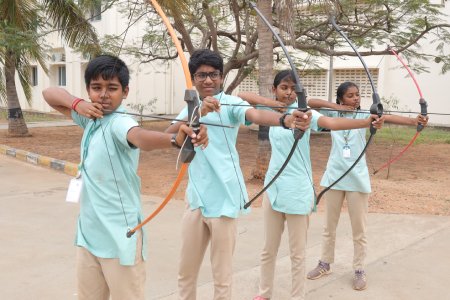
1. Sports Build Physical Fitness and Healthy Habits
The importance of physical fitness is one of the first lessons that sports impart. These days, kids are more interested in screens than playing outside. Children who engage in physical activity have better general health and a stronger immune system. More significantly, they discover how crucial it is to keep up a healthy lifestyle.
2. Sports Strengthen Discipline and Time Management
Without discipline, it is impossible to succeed in sports. Essential components of the process include consistent practice, adherence to schedules, rules, and respect for coaches and teammates. This methodical approach frequently results in improved time management and increased academic responsibility.
Participating in sports teaches students how to manage extracurricular activities and academics.
3. Sports Boost Mental Strength and Emotional Resilience
The importance of sports in student life is deeply evident in emotional development. Every sport involves challenges, setbacks, and unpredictable outcomes.
Losing a match teaches students how to process disappointment and improve without giving up. Winning teaches confidence without arrogance. These emotional strengths prepare students for real-world experiences where resilience, persistence, and adaptability are required for success.
4. Sports Enhance Teamwork and Social Skills
Life is full of collaborations, from group projects in school to working with colleagues in a professional setting. Sports introduce students to team dynamics early. They learn how to cooperate, coordinate, communicate, and support one another. Team sports, in particular, teach students how individual strengths contribute to collective success. Even individual sports foster healthy competition, peer learning, and understanding diverse personalities.
5. Sports Improve Concentration and Academic Performance
Contrary to the misconception that sports distract from studies, research consistently shows that physically active students perform better academically.
Exercise improves blood circulation to the brain and enhances concentration and alertness. Students who participate in sports often demonstrate better classroom engagement and problem-solving abilities. This connection highlights how the importance of sports in student life involves balancing both mind and body.
6. Sports Build Confidence and Leadership
Confidence does not come from classrooms alone; it grows through experiences where students challenge themselves and overcome limitations.
Sports offer constant opportunities for success and improvement. Whether a student leads a team as a captain or motivates teammates to give their best, leadership evolves naturally. Sports also teach students how to make quick decisions under pressure.
7. Sports Encourage Healthy Competition and Sportsmanship
Competition is a natural part of life. Sports expose students to healthy competition early on, teaching them how to handle both victory and defeat with grace. Learning sportsmanship ensures that competitiveness does not become aggression. Instead, it nurtures respect, fairness, and empathy.
The importance of sports in student life becomes especially clear when students learn that success is not just about winning, but about effort and attitude.
Conclusion: Nurturing Future Champions at Chettinad Vidya Mandir
Schools play an important role in promoting sports and physical education as part of overall development. Chettinad Vidya Mandir, Karur, a respected CBSE school in Karur, understands the need to balance academics with sports and creativity.
The school offers students chances to explore different sports and build their confidence.
By including sports in daily learning, we help students become well-rounded individuals who are ready for the challenges and opportunities in life.
FAQs
1. Why are sports important in student life?
Sports help students build physical fitness, mental resilience, discipline, teamwork, confidence, and emotional strength, contributing to overall personality development.
2. Do sports affect academic performance?
Yes, positively. Physical activity enhances concentration, memory, and focus, leading to better academic outcomes and improved learning efficiency.
3. What life skills do sports teach?
Sports teach leadership, responsibility, time management, sportsmanship, communication, and the ability to handle both success and failure.
4. Should schools prioritise sports along with academics?
Absolutely. A balanced education requires physical, emotional, and intellectual development. Sports support growth in areas that academics alone cannot cover.
5. How do sports shape future success?
Sports cultivate confidence, resilience, discipline, and strategic thinking — essential skills for professional and personal life success.