
Learner engagement has long been recognised as a critical determinant of achievement in higher education. Active participation in the learning process not only enhances academic performance but also deepens understanding and fosters sustained intellectual growth.
As opposed to a traditional teacher-centric learning approach, experimental learning is learner-focused and is designed to cultivate students’ involvement and interest. Experimental Learning facilitates active learning by providing real-world experiences where learners interact, evaluate, and become involved with a topic being taught.
What is Experimental Learning?
Experimental Learning is learning by doing. Giving students hands-on experiences enables them to connect and relate to the knowledge learned in the classroom. These learning opportunities exist in a variety of course and non-course-based forms like community service, student teaching, practical concept learning rather than rote learning, and internships, to name a few.
Key aspects of Experimental Learning include:
- Active participation – learners take responsibility and engage directly in the process
- Collaboration – group work and interaction strengthen understanding
- Application – theory is tested through real‑world problem‑solving
- Holistic growth – EL develops cognitive, emotional, and behavioural skills together
- Feedback & reflection – learners refine knowledge and transfer it to new contexts.
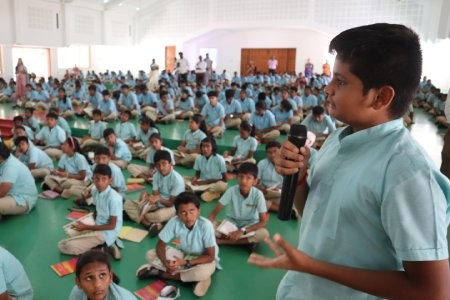
How Experimental Learning Shapes a Student’s Approach Towards Real Life Scenarios?
When students participate in experimental education opportunities, they gain:
- A deep understanding of the course material and being able to relate to situations better
- A holistic view of the community around them
- A fresh outlook on the insights into their own skills, interests, passions, and values
- Desire to look for opportunities to collaborate and step out of the comfort zone
- Self-confidence and leadership skills
- A widened point of view to the real-world situations and a faster problem-solving attitude
- Regulating and building a stronger connection between learning and reality
Why is Experimental Learning Important?
To ensure learners not only acquire knowledge and receive accurate training, but it’s also equally vital to give them the time and space to build the ability to apply what they’ve learned. This helps them translate skills into real-world problem‑solving that directly supports their career growth.
1. Classroom engagement and motivation
There are three facets to classroom engagement: physical, emotional, and psychological. Every learner should have exposure to the development of these three. To engage a learner, motivation is needed; it brings self-awareness and promotes goal-oriented behaviour. This is crucial to the process of learning and achieving goals beyond the classroom. Classroom motivation is influenced by the learner, the educator, the course content, the teaching method, and the learning environment. That’s where experimental learning turns out to be valuable.
2. Real-world skills
Experimental Learning goes beyond traditional classroom teaching by putting learners at the centre of the process. Instead of just memorising facts, students actively engage in experiences, reflect on them, connect those insights to theory, and then apply their knowledge to solve real problems.
This cycle of Do, Reflect, Think, Apply helps learners build confidence, develop practical skills, and see the relevance of what they’re learning to their future careers.
3. Holistic development
Experimental Learning covers not only the cognitive development but also the affective and behavioural dimensions that encompass the whole child. By immersing students in real‑world tasks, it challenges them to think critically, collaborate, and make decisions that mirror professional situations.
This method helps students feel more confident and flexible, which encourages them to take charge of their own learning. It links theory to practice, improves problem-solving skills, and helps students grow emotionally and socially as well as academically.
Final Thoughts
Experimental Learning enables students to transcend rote memorisation through collaborative projects, real-world problem-solving, and active reflection. It helps the holistic development—mentally, emotionally, and socially—while also boosting their confidence, flexibility, and ability to use what they know in new situations.
We at Chettinad Vidya Mandir in Karur believe that school should get kids ready for more than just exams. That’s why we believe in teaching through experience. We want students to connect what they learn in the classroom with what they do in real life, think critically, and act responsibly. We do this through hands-on activities, group challenges, and community service.
FAQ
Q1: How is experimental learning different from regular classroom teaching?
Experimental learning is all about *learning by doing*. Instead of just memorising facts, students do real-world tasks, think about what they learnt, and use what they know to solve problems. This makes learning more useful, interesting, and important.
Q2: What are the benefits of experimental learning for students at Chettinad Vidya Mandir in Karur?
It helps students become more confident, flexible, and good at solving problems. When students connect theory to practice, they learn more about the subjects and are better prepared to deal with problems in the real world that aren’t in the classroom.
Q3: Is experimental learning appropriate for every age group?
Younger students learn best through hands-on activities and exploration. Older students, on the other hand, learn best through projects, group work, and exercises that help them make decisions and get ready for careers and life skills.
Q4: How does learning by doing get my child ready for the future?
Experimental learning at Chettinad Vidya Mandir in Karur gives students skills they can use in real life. It helps them develop skills like critical thinking, working with others, and being flexible, which will help them do well in college, at work, and in the real world.