
1. Strong Cognitive & Language Development
One of the strongest arguments for early childhood education is cognitive growth. Children in high-quality learning environments:
- Ask more complex questions
- Show curiosity and problem-solving ability
- Use vocabulary confidently
- Understand patterns, shapes, numbers, and sequences
- Develop early reasoning skills
During these years, neural connections form rapidly. Language expands dramatically. Children engaged in storytelling, phonetics, rhymes, discussions, and guided conversations develop stronger communication and comprehension abilities.
For Parents, the benefit is clear: a child who communicates well is often more confident and academically prepared later.
2. Social & Emotional Development: Learning Beyond Books
Parents often focus on academics, but social-emotional growth forms the heart of the importance of early childhood education.
When children interact with peers, teachers, and structured environments, they learn to:
- Share and cooperate
- Handle conflicts with maturity
- Express feelings constructively
- Show empathy and kindness
- Take turns and practice patience
- Build friendships and belonging
These skills are essential throughout life, whether at home, school, or in the workplace. Children who receive early social exposure struggle less with separation anxiety, shyness, or emotional dependency.
It also helps them manageIt also helps them manage big emotions, a challenge many parents face during toddler years.
3. Better Academic Readiness & Future School Performance
Children who attend early education programs demonstrate stronger school readiness in primary grades. Educators globally highlight the importance of early childhood education for building:
- Pre-literacy and numeracy foundations
- Attention span and focus
- Classroom discipline
- Listening and comprehension
- Ability to follow instructions
This doesn’t mean pushing children into heavy academics. Instead, it means helping them develop the mental frameworks needed to enjoy learning: creativity, curiosity, and resilience.
Students who love learning early are more likely to excel later.
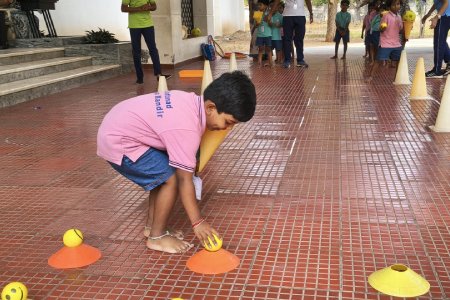
4. Boosted Confidence & Independence
Confidence doesn’t develop overnight. It grows when children learn to trust themselves, make choices, and succeed in age-appropriate tasks.
Early childhood education promotes independence by allowing children to:
- Try new activities
- Take small responsibilities
- Learn self-care routines
- Speak up in groups
- Explore without fear of failure
Parents often notice that children who attend structured early learning become more self-assured, flexible, and eager to participate. This confidence fuels long-term self-esteem.
5. Creative Thinking & Holistic Learning
The modern world doesn’t reward just memorization; it values creativity, innovation, and adaptability. One of the most understated aspects of the importance of early childhood education is how it nurtures imagination.
Through music, art, puzzles, pretend play, storytelling, and sensory activities, children develop:
- Curiosity
- Imagination
- Out-of-the-box thinking
- Motor coordination
- Spatial awareness
Play-based learning makes children natural explorers. It turns problems into experiments and challenges into games.
Holistic development means nurturing not just the mind, but heart, body, and personality.
Why Parents Should Prioritize Early Learning
If you’ve ever wondered, “Will early childhood education make a difference?” the answer is a genuine Yes.
Today’s global education standards emphasize that early exposure leads to:
- Higher graduation rates
- Better emotional wellbeing
- Stronger learning abilities
- Improved behavior and self-regulation
- Enhanced problem-solving
Children who begin learning early adapt to structured environments without stress, which makes formal schooling smoother.
Parents who invest early are not just preparing children for school; they are giving them a head start in life.
The Role of Parents in Early Learning
Schools play a crucial role, but Parents are the child’s first teachers. Partnering with educators multiplies results.
Parents can support learning by:
- Encouraging questions
- Reading bedtime stories
- Talking about emotions
- Providing sensory play
- Allowing exploration
- Limiting screens
- Celebrating effort, not just achievement
True learning is not limited to classrooms; it is built through relationships and experiences.
Choosing the Right Early Education School
Not all learning environments are the same. When Parents select a school, consider:
- Safety & hygiene
- Teacher qualifications & care
- Balanced curriculum
- Activity-based learning
- Individual attention
- Infrastructure & outdoor play
- Child-friendly environment
A good school helps a child feel seen, heard, and valued: The Foundation Shapes the Future
The importance of early childhood education cannot be overstated. These foundational years determine how children think, feel, behave, connect, and learn for the rest of their lives. For Parents, early learning is not just an academic decision; it is an investment in character, emotional strength, social adaptability, and lifelong confidence.
If you are seeking an environment that nurtures holistic development, emotional well-being, and strong learning foundations, Chettinad Vidya Mandir Karur, provides the ideal setting where children are encouraged to explore, imagine, and grow into confident young learners.
Frequently Asked Questions (FAQs)
1. What age is ideal for early childhood education?
Usually between ages of 2 to 6, when children experience rapid brain and personality development.
2. Is early childhood education only about academics?
No, its importance lies in social, emotional, cognitive, and behavioral development.
3. Does early learning help with future schooling?
Yes, it improves readiness, confidence, attention span, and learning skills.
4. Will my child struggle without early learning?
Every child is unique, but early exposure often reduces adjustment stress during formal school years.
5. How can Parents support early learning at home?
Through reading, interactive conversations, emotional validation, sensory activities, and play-based exploration.