
Over the past decade, schools have rethought how learning happens. Instead of limiting education to textbooks and exams, modern teachers embrace hands-on experiences that let students explore knowledge in real time. This approach is called experimental learning, a model focused on learning through doing, questioning, experimenting, and reflecting.
While the traditional system placed teachers at the center, today the student is the active participant. Children learn better when they interact with materials, environments, and ideas. As a result, experimental learning is now a powerful tool in classrooms, labs, playgrounds, digital spaces, and outdoor environments.
Understanding the Meaning of Experimental Learning
So what does experimental learning mean? At its core, it is an educational method where students gain knowledge through direct experiences rather than only through instruction or memorization. When students experiment, observe, apply, and reflect, learning becomes deeper, more relevant, and more memorable.
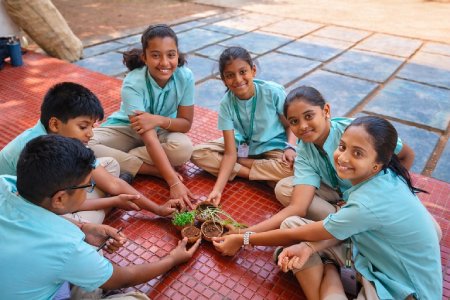
For example, instead of reading about plant growth from a textbook, experimental learning encourages students to plant seeds, water them, measure growth, compare results, and present findings. In this method, learning is active rather than passive.
Why Experimental Learning Matters in Modern Classrooms
Today’s world demands critical thinkers, problem-solvers, communicators, and innovators. Information is available everywhere, on the internet, in the media, and through technology. Schools that rely only on old methods risk producing students who can memorize facts but cannot use them in real life.
This is where experimental learning makes education relevant. It teaches students how to:
- Ask meaningful questions
- Investigate and explore
- Fail and try again
- Think analytically
- Apply concepts to real-world situations
- Collaborate and communicate
In many ways, experimental learning prepares students for life beyond school, not just for exams.
How Experimental Learning Works in Classrooms
To apply experimental learning, teachers structure lessons so students engage actively rather than absorb passively. This can happen through:
- Experiments and demonstrations
- Projects and group tasks
- Roleplay and simulations
- Field trips and industry visits
- Makerspace activities
- Digital labs and VR classrooms
- Debates and presentations
- Art-infused thematic learning
These activities help students explore complex ideas in simple and engaging ways. The teacher becomes a guide, facilitator, and mentor instead of a lecturer.
Benefits of Experimental Learning for Students
One of the strongest advantages of experimental learning is its ability to turn knowledge into experience. Students do not just know something, they understand it and can apply it.
1. Enhances Retention & Understanding
Research shows that students remember more when they do rather than listen. Learning becomes enjoyable, interactive, and meaningful, improving short-term and long-term retention.
2. Builds Critical Thinking & Curiosity
Experimental learning encourages students to analyze situations, evaluate outcomes, and question assumptions. This develops reasoning skills essential for exams, future careers, and daily decisions.
3. Boosts Confidence Through Discovery
When children complete projects, conduct experiments, or present results, they feel ownership of their learning process. This builds confidence and a sense of achievement.
4. Encourages Collaboration & Communication
Group-based experimental activities teach students how to interact, share responsibilities, and solve problems as a team, skills highly valued in professional environments.
5. Bridges Theory and Reality
A classroom based on experimental learning shows students how concepts work beyond the textbook. Math applies to architecture, science to the environment, language to persuasion. Learning becomes practical rather than theoretical.
Experimental Learning & The NEP 2020 Connection
India’s National Education Policy (NEP 2020) strongly promotes activity-based and experiential models of education. While NEP calls it “experiential learning,” the intention aligns closely with the goals of experimental learning — shifting education toward competency, application, and creativity.
Elements such as vocational education, coding, arts integration, project-based assessments, and interdisciplinary learning make experimental methods more central than ever.
Examples of Experimental Learning in Real Classrooms
To visualize how experimental learning works, consider these classroom examples:
- Science: Students design and test water filters instead of reading about purification.
- Math: Measuring objects and building crafts using geometric shapes.
- Social Science: Creating mock parliaments, roleplays, and debates.
- Literature: Performing scenes from plays or writing alternative story endings.
- Environment: Conducting surveys on waste management in their locality.
- Technology: Coding, robotics, and STEM challenges.
In each case, the teacher introduces concepts but lets students explore outcomes, mistakes, and improvements firsthand.
How Teachers Implement Experimental Learning
Teachers often follow four steps to guide experimental learning:
- Experience – Students perform or explore an activity.
- Reflect – They evaluate what went right or wrong.
- Conceptualize – They connect the experience to broader ideas.
- Apply – They use the learning in new contexts or projects.
This loop makes learning dynamic and interactive.
Classroom Culture Needed for Experimental Learning
While the method is powerful, it requires a suppWhile the method is powerful, it needs a supportive learning environment. Schools need space for mistakes and creativity
- Open-ended questioning
- Practical labs and equipment
- Technology integration
- Project time and assessment space
- Enjoy learning instead of fearing it
- Discover strengths and talents early
- Develop a more open and curious mindset
- Learn from mistakes without fear
Schools committed to experimental learning typicSchools committed to experimental learning allow children to explore beyond traditional boundaries.
Experimental learning trains students for future workplaces, which value innovation, teamwork, critical thinking, emotional intelligence, and adaptability. Students who practice hands-on and project-based learning early become more confident, creative, and independent thinkers in adulthood.
In a world where AI, automation, and digital transformation are redefining industries, experimental learning is a key part of future readiness.
Why Parents Should Care About Experimental Learning
Parents today are more conscious about holistic learning and long-term development. They recognize that the future is uncertain, competitive, and rapidly changing. The goal is no longer just to score high in exams, it is to develop skills, values, and resilience that help children succeed in life.
Choosing a school that embraces experimental learning ensures that children:
These qualities stay with children beyond school.
Conclusion
If you are searching for a school that blends academics with real-world learning experiences, Vidya Mandir Karur stands out as one of the strong CBSE school in Karur. The school integrates experimental learning through hands-on projects, STEM labs, sports, arts, field exposure, and student-led activities. With modern teaching methods, experienced faculty, and an NEP-aligned curriculum, Vidya Mandir Karur prepares learners for examinations and for life.
Frequently Asked Questions
1. What is experimental learning in simple terms?
It is learning through hands-on experience, experimentation, collaboration, and reflection.
2. How does experimental learning help students?
It improves understanding, boosts confidence, encourages curiosity, and enhances problem-solving skills.
3. Is experimental learning better than traditional methods?
It complements traditional learning by adding practical application and real-world context.
4. Can experimental learning be used for all subjects?
Yes, it can be adapted for science, math, languages, social science, technology, arts, and life skills.
5. Why do modern schools adopt experimental learning?
Because it aligns with NEP reforms, future skill demands, and holistic education goals.