
Early education is the foundation of a successful future, and if incorporated with a joyful learning experience, it will prove to be the most cherished experience. As parents, you would want to give your child the best, but the best doesn’t always have to be academics. It is important to understand how joyful learning can be a contributor in the holistic development of the students.
When students feel emotionally connected to what they’re learning, knowledge comes more naturally. They begin to ask questions, explore ideas, and put in effort without being prompted. This emotional safety net builds confidence and fosters deeper love towards learning things.
In this blog, we will explore the role of play in fostering joyful learning and how it can benefit children.
What is Joyful Learning?
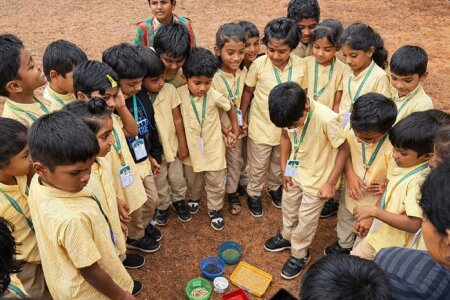
Joyful learning is an approach that allows children to learn through happiness and engagement. It draws on storytelling, nature walks, collaboration, music, roleplay, and hands‑on activities to make the process lively and meaningful. The goal is simple: to help children fall in love with learning itself.
When children feel happy and secure, their brains become more receptive. Positive emotions trigger the release of dopamine, which boosts attention span and strengthens memory. As a result, enjoyable learning experiences stay with them longer. They participate more actively, ask thoughtful questions, and develop a deeper connection with what they are learning.
The Role of Joyful Learning in Education
The Benefits of Joyful Learning
a. Enhanced Creativity
When children experience joyful learning through storytelling, roleplay, and hands‑on activities, they are free to explore ideas without rigid boundaries. This nurtures creativity and problem‑solving skills that are vital for success in any field.
b. Improved Social Skills
Joyful learning encourages collaboration and peer interaction. Children learn to cooperate, share, negotiate, and resolve conflicts — building social skills that strengthen relationships throughout life.
c. Cognitive Development
By making learning enjoyable, children engage more deeply in critical thinking, spatial awareness, and early literacy. Joyful learning stimulates curiosity and lays a strong foundation for academic growth.
d. Physical Health
Activities like music, dance, and outdoor exploration in joyful learning promote motor skills and overall physical wellbeing, helping children stay active and healthy.
e. Emotional Well‑Being
Joyful learning creates a safe, happy environment where children can express emotions and cope with stress. This fosters resilience, confidence, and a positive attitude towards learning.
Key Tips to Implement Play‑Based Learning
To truly unlock the power of joyful learning in early education, both teachers and parents can take a few simple but meaningful steps:
1. Create Playful Environments
Try designing learning spaces in a way that creates an exploratory and fun environment. Be it at home or school, a welcoming environment gives children the freedom to move, imagine, and discover new things.
2. Provide Open‑Ended Materials
Building up creativity is an important goal. You can bring in art supplies, puzzles, pretend play, and other resources to let children have a carefree, fun time while building something worthy and learning on the go.
3. Balance Structure and Freedom
Blend guided activities with plenty of unstructured playtime. This balance ensures children meet learning goals while still following their natural curiosity and interests.
How Joyful Learning is an Integral Part of Holistic Development at Chettinad Vidya Mandir?
At CVM, we are committed to offering a holistic education. We aim to help children develop physically, emotionally, intellectually, cognitively and spiritually using a comprehensive learning approach. The curriculum is supported by robust co-curricular and extra-curricular programmes, culture-based value education and leadership opportunities.
- Storytelling and Creative Arts
- Nature and Exploration
- Collaboration and Roleplay
- Emotional Security and Confidence
- Stronger Memory and Attention
Kids learn through stories, theatre, music, and art that get their imaginations going and help them remember what they’ve learnt.
Students learn through real-life experiences when they go for walks outside and do activities that are based on nature.
Group projects and role-playing help kids learn how to work together, understand other people’s feelings, and talk to each other. These skills will help them in life after school.
A happy environment makes kids feel safe, which boosts their confidence and makes them more likely to ask questions.
The school day for children at the Primary begins with Circle Time for about 20-30 minutes. Our circle-time activities are multifaceted and promote the importance of both the individual and the community.
FAQ
Q.1 Why is joyful learning important in childhood?
Joyful learning enables a free development of the mind and does not restrict a child from exploring the curious side of them. Joyful learning makes students confident and offers them skills to ace their social and professional life outside home and school.
Q.2 Why is joy important in learning?
Joy of learning in a free and non-biased environment enhances the overall experience for the student. It builds creativity, gives them exposure to critical thinking, make real-life decisions in a practical manner rather than being influenced by emotions, and develops them holistically.
Q.3 What are the objectives of joyful learning?
The objective is to develop learners holistically in all three facets, i.e. cognitive, emotional, and physical, in a pleasant and happy environment.
Q.4 How does joy in learning increase?
When students are encouraged to dabble and tinker with the subject matter, their creativity flows freely, and joy returns to the learning process. Inspiring children (or even yourself) to pick up books again and share those experiences with others can greatly enhance the joy of learning, making it more engaging and lasting.