
In an era where education is evolving beyond textbooks, the need for meaningful, application-oriented learning has become more important than ever. Project based learning is emerging as a powerful approach that bridges the gap between theoretical knowledge and real-world understanding. Within the framework of the CBSE curriculum, this method is steadily gaining importance, shaping how students engage with concepts and apply them in practical contexts.
For parents and educators, understanding how Project based learning CBSE classrooms function and how they support experiential learning offers valuable insight into how students develop deeper knowledge, critical thinking, and independence. This shift is not just a pedagogical trend but a necessary step toward preparing students for future challenges.
Understanding Project-Based Learning in the CBSE Context
At its core, project based learning is an instructional approach where students actively explore real-world problems and challenges over an extended period. Instead of passively receiving information, learners investigate, collaborate, and create solutions.
What Makes Project-Based Learning Different?
Unlike traditional methods that focus on memorization, project based learning encourages students to:
- Work on real-life scenarios and case studies
- Engage in research, analysis, and problem-solving
- Collaborate with peers and present findings
- Reflect on their learning process
- Subject enrichment activities
- Interdisciplinary projects
- Art-integrated and skill-based learning
- A science project on renewable energy allows students to build models and understand real-world applications
- A mathematics project involving budgeting helps students apply numerical concepts practically
- Social science projects encourage exploration of societal issues and cultural contexts
- Builds curiosity and intrinsic motivation
- Develops research and analytical skills
- Promotes independent thinking
- Share ideas and responsibilities
- Listen to diverse perspectives
- Present their findings clearly
- Analyze complex situations
- Evaluate multiple solutions
- Make informed decisions
- Time management skills
- Accountability for their work
- The ability to meet deadlines
- A project on environmental sustainability can include science, geography, and economics
- A historical project can integrate literature and art
- Guide students in framing questions
- Support research and exploration
- Encourage reflection and feedback
- Project presentations
- Portfolios
- Peer and self-assessment
In the context of Project based learning CBSE, this approach aligns closely with the board’s emphasis on competency-based education and holistic development.
CBSE’s Shift Toward Experiential Learning
The CBSE curriculum has increasingly integrated experiential learning into its framework. Schools are encouraged to incorporate:
This integration ensures that project based learning is not treated as an add-on but as an essential part of classroom practice.
Enhancing Conceptual Understanding Through Experiential Learning
One of the most significant advantages of project based learning is its ability to deepen conceptual understanding. When students actively engage with a topic, they are more likely to retain and apply knowledge effectively.
Learning by Doing
Experiential learning transforms abstract concepts into tangible experiences. For example:
Such experiences make project based learning CBSE classrooms more dynamic and meaningful.
Encouraging Inquiry and Curiosity
Through project based learning, students are encouraged to ask questions, explore possibilities, and seek solutions. This inquiry-driven approach:
These outcomes align strongly with the goals of experiential learning, where the focus is on understanding rather than memorizing.
Building Essential Skills for the Future
Beyond academic knowledge, project based learning plays a crucial role in developing life skills that are essential in today’s world.
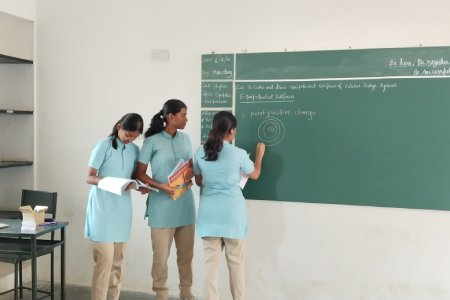
Collaboration and Communication
Projects often require teamwork, where students must:
This collaborative environment enhances interpersonal skills, which are a key component of Project based learning CBSE classrooms.
Critical Thinking and Problem-Solving
When students work on real-world challenges, they learn to:
These skills are fundamental to both academic success and real-life problem-solving, reinforcing the value of experiential learning.
Time Management and Responsibility
Completing a project involves planning, execution, and review. Through this process, students develop:
Such habits prepare students for higher education and professional environments.
Integrating Project-Based Learning in Everyday Classroom Practice
For project based learning to be effective, it must be thoughtfully integrated into the curriculum rather than treated as an occasional activity.
Interdisciplinary Approach
One of the strengths of Project based learning CBSE is its ability to connect multiple subjects. For instance:
This interdisciplinary approach reflects real-world scenarios, where knowledge is not confined to a single subject.
Role of Teachers as Facilitators
In project based learning, the role of the teacher shifts from being a knowledge provider to a facilitator. Teachers:
This approach fosters a learner-centered environment, which is central to experiential learning.
Assessment Beyond Exams
CBSE encourages diverse assessment methods, including:
These methods ensure that project based learning outcomes are evaluated holistically, focusing on both process and understanding.
Creating Meaningful Learning Environments
The success of project based learning depends largely on the learning environment created by schools. Institutions that embrace a student-centered philosophy naturally integrate such approaches into their teaching practices.
At Chettinad Vidya Mandir International School, learning extends beyond textbooks into experiences that encourage exploration, inquiry, and reflection. Classrooms are designed to support experiential learning, where students engage with concepts through activities, discussions, and projects.
This approach ensures that Project based learning CBSE is not limited to assignments but becomes a meaningful part of everyday learning, helping students connect knowledge with real-life applications.
Conclusion
As education continues to evolve, the importance of approaches like project based learning becomes increasingly evident. Within the CBSE curriculum, this method supports not only academic achievement but also the development of essential life skills.
By integrating experiential learning into classroom practices, schools enable students to move beyond rote memorization and toward deeper understanding. The result is a generation of learners who are curious, capable, and confident in applying their knowledge to real-world challenges.
For parents and educators, the focus should be on nurturing environments where learning is active, engaging, and meaningful. When implemented thoughtfully, project based learning CBSE classrooms can transform education into a truly enriching and future-ready experience.