
When parents talk about school education today, the CBSE curriculum often comes up. The Central Board of Secondary Education is now seen as a standard for structured learning, modern academics, and preparing students for the future. But what exactly does the CBSE curriculum cover? How is it put together? And why do so many parents in India and around the world choose it for their children?
To answer these questions, let’s look past just subjects and textbooks to explore the meaning, purpose, and structure of the CBSE curriculum. We’ll also see why it remains important in 2026 and beyond.
What the CBSE Curriculum Really Means
The CBSE curriculum is the academic plan, learning goals, teaching methods, and assessment guidelines set by the Central Board of Secondary Education. It describes the intellectual, social, and emotional growth expected from students at each grade. Most importantly, it offers a balanced approach that values academic achievement as well as life skills, creativity, ethics, sports, communication, and technology.
A key strength of the CBSE curriculum is that it does not treat learning as just memorizing facts. Instead, it encourages understanding, applying, analyzing, and evaluating—skills that are the basis for solving real-world problems.
How the CBSE Curriculum Builds Foundations
IIn the early years, the CBSE curriculum focuses on basic reading, math, language skills, and social understanding. Children are encouraged to explore, ask questions, and interact with their surroundings, rather than just memorizing ideas. Activities like reading, storytelling, class discussions, small projects, and hands-on tasks help spark their curiosity.AAs students move through the primary grades, the curriculum becomes more organized. Science lessons focus more on asking questions, math becomes more logical, and social sciences start linking history, geography, and civics to things students know. This gradual approach helps students learn smoothly without feeling overwhelmed early on.
Middle Years: Strengthening Concepts and Exposure
By the middle school years, conceptual building becomes central. Students are introduced to abstract reasoning, lab-based scientific observations, grammar competency, and broader cultural and civic perspectives. The cbse curriculum ensures that learning becomes interdisciplinary, allowing a history lesson to connect with literature, or a science experiment to relate to environmental concerns.
This is also the stage where the curriculum gradually introduces digital learning, coding awareness, structured assignments, and collaborative projects. Such exposure prepares students for the academic rigor of high school and the analytical thinking essential for future careers.
Secondary Stage: Board Exams and Academic Maturity
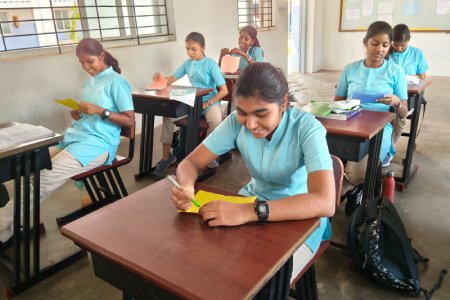
In Grades 9 and 10, the CBSE curriculum gets students ready for board exams and more organized learning. It balances theory with hands-on work, especially in science labs, math, and applied subjects. Literature lessons focus more on analysis, language classes encourage interpretation, and civics helps students understand society, government, and rights.
The assessment The CBSE assessment system has both internal and external parts. Board exams are still important, but ongoing evaluation through projects, assignments, and class activities helps lower stress and supports steady learning instead of last-minute cramming.ondary Stage: Specialization and Career Direction
In Grades 11 and 12, students start to specialize in their studies. They can choose Science, Commerce, or Humanities, and the CBSE curriculum lets them mix subjects within these streams. This flexibility is helpful because many modern careers need skills from different fields. For example, a student interested in architecture might study math, design, and physics, while someone who wants to go into digital marketing might combine commerce and psychology.
The cbse curriculum is also widely recognized for aligniThe CBSE curriculum is also well known for matching the needs of competitive exams like JEE, NEET, CUET, CLAT, and others. Its focus on concepts and reasoning gives students a solid foundation for technical and higher education.
After the NEP reforms, the CBSE curriculum added structured skill education to help students face real-life challenges. Skills such as critical thinking, communication, entrepreneurship, digital literacy, problem solving, and financial awareness are now part of the academic program, not separate from it.
This shift is especially important because future workplaces value adaptability, innovation, and collaboration over simple textbook knowledge. The cbse curriculum supports these competencies from school, giving students a head start in both higher studies and careers.
Technology Integration and Modern Classrooms
Education in 2026 operates in a digital environment, and the cbse curriculum has adapted accordingly. Smart boards, virtual labs, online research, digital textbooks, coding, and tech-enabled assignments help children learn how to interact with technology meaningfully rather than passively. This digital exposure is particularly useful for STEM pathways and global learning opportunities.
Rather than seeing technology as a distraction, the curriculum uses it as a tool for creativity, learning, and innovation.
The Role of Assessments in CBSE Curriculum
Many people misunderstand the CBSE curriculum’s assessment system. Some parents think it relies mostly on board exams, but that is not true anymore. Now, assessments include projects, regular tests, oral discussions, practicals, portfolios, and written exams. This variety helps students manage challenges in smaller steps, instead of feeling all the pressure at once.
Continuous assessment also helps teachers spot learning patterns early and give students the support they need.
Holistic Development Beyond Academics
Many parents see academic results as the main sign of quality, but the CBSE curriculum has a wider goal. Through sports, arts, cultural activities, clubs, competitions, and value education, it encourages emotional growth, fitness, self-expression, leadership, and confidence. These experiences build character and resilience, which are important for success as adults.
Why Parents Prefer the CBSE Curriculum
Parents today seek educational frameworks that balance academic ambition with future relevance. The cbse curriculum addresses this need by offering national-level academic alignment, recognition across universities, consistency for relocating families, structured evaluation, and strong preparation for competitive examinations.
It also supports students planning international studies since CBSE’s conceptual clarity helps them transition smoothly to global standards of higher education.
Curriculum Matters, But Implementation Matters More
The CBSE curriculum is well-structured, forward-looking, and flexible. However, its success depends on how well schools put it into practice. Good implementation needs dedicated teachers, organized learning systems, active student participation, and strong values.
Vidya Mandir Karur, a CBSE school in Karur, stands out for how it brings the CBSE curriculum to life. The school uses creative teaching, digital tools, value-based education, and a focus on overall student growth. It creates a place where children do more than just learn—they thrive and get ready for further studies, careers, and life.
FAQs
1. What does the CBSE curriculum include?
The cbse curriculum includes academic subjects, skill development, assessments, co-curricular activities, digital integration, and value-based learning frameworks.
2. Is the CBSE curriculum suitable for competitive exams?
Yes. The cbse curriculum aligns closely with exams like JEE, NEET, CUET, and many national entrance tests.
3. How is CBSE different from state boards?
The cbse curriculum focuses more on conceptual understanding and national-level standardization, while state boards often emphasize localized content.
4. Does CBSE allow flexible subject combinations?
Yes, especially in senior secondary grades, the CBSE curriculum allows interdisciplinary subject choices.
5. Is CBSE considered future-ready?
Yes. With technology integration, career exposure, and skills education, the cbse curriculum is aligned with modern expectations.